
What Tea Tree Oil Actually Does for Skin
Introduction
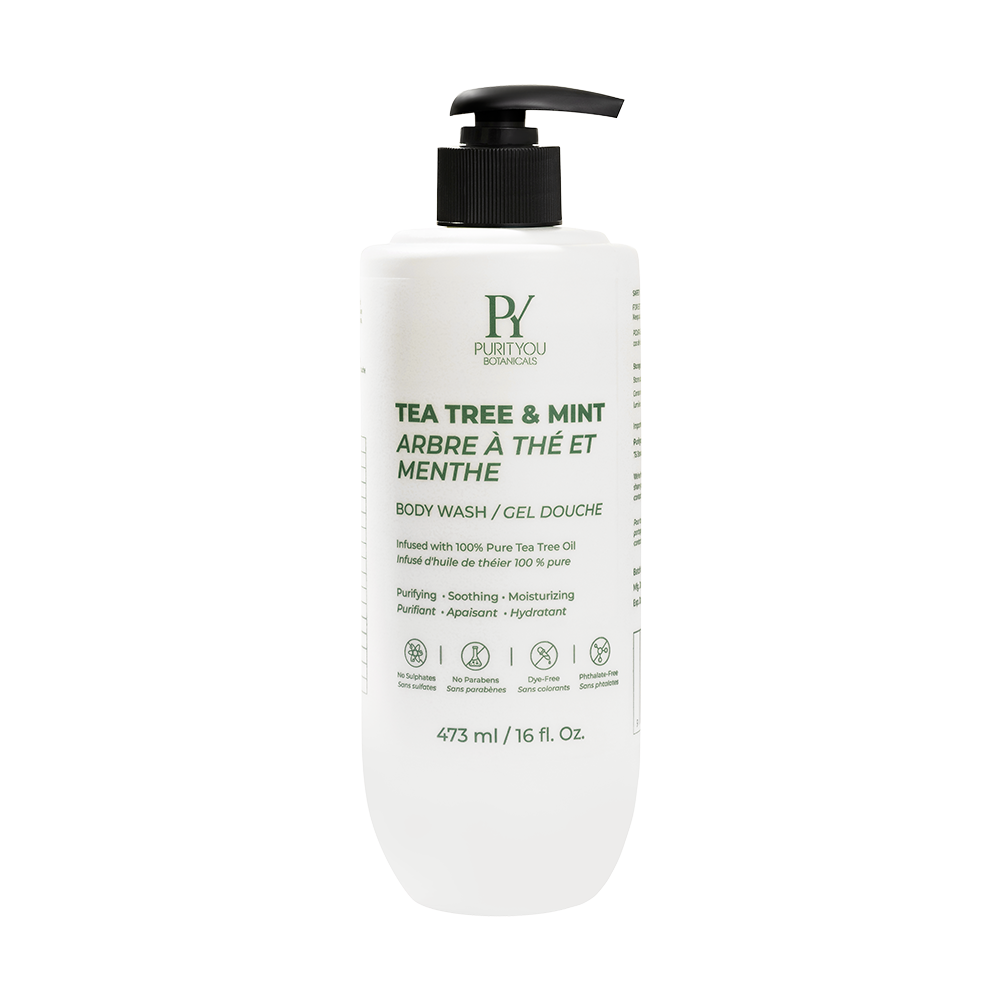
Tea tree body wash is one of the most searched natural skincare terms in Canada right now. And the interest is justified — tea tree oil has real, peer-reviewed antimicrobial activity. But here is what most brands won't tell you: the ingredient only delivers meaningful results when it is used at the right concentration, in the right formula, in the right type of product.
Used correctly, it is one of the most effective natural antimicrobials available in personal care. Used incorrectly, it either irritates the skin or does nothing at all.
As a pharmaceutical scientist, I am going to give you the honest, evidence-based picture — without the hype, and without unnecessary skepticism.
What Tea Tree Oil Actually Does to Skin
Tea tree oil is derived from the leaves of Melaleuca alternifolia, native to Australia. Its primary active compound, terpinen-4-ol, disrupts the cell membranes of bacteria and fungi — a mechanism that has been extensively studied and confirmed in peer-reviewed literature.
This is not a cosmetic claim. It is documented antimicrobial activity against organisms including Staphylococcus aureus and Cutibacterium acnes — the bacteria most commonly associated with acne and skin infections.
Tea tree oil does not simply mask odour or create a tingly sensation. It actively reduces the microbial load on skin that is responsible for breakouts, irritation, and body odour.
What this means for you:
The reputation is earned. But the form it comes in — and the concentration it is used at — are the variables that determine whether you actually see results.
The Concentration Question: Where Most Brands Get It Wrong
Research consistently suggests that concentrations between 5% and 10% are effective for meaningful antimicrobial activity. Below 1%, the effect is minimal. Above 15% in a leave-on product, irritation risk increases significantly.
A body wash is a rinse-off product. This changes the equation. The active ingredient is in contact with the skin for 30 to 90 seconds, which means the formula needs to work efficiently in a very short window — and leave a residual effect without stripping the skin barrier.
Many brands use tea tree oil in a body wash at a sub-therapeutic concentration because they are designing primarily for regulatory safety without accounting for clinical efficacy. The result is a product that smells like tea tree oil but does little for skin that actually needs its benefits.
What this means for you:
Do not assume a body wash labelled "with tea tree oil" is delivering a therapeutic dose. Look for products where tea tree oil appears within the first half of the INCI ingredient list — and where the formulator has balanced it with calming ingredients to prevent irritation.
Rinse-Off vs. Leave-On: A Critical Distinction
This is rarely explained clearly, and it matters enormously.
Leave-on products — serums, spot treatments, creams — keep the active in contact with skin all day or overnight. Concentrations must be carefully managed because prolonged exposure raises irritation risk.
Rinse-off products — body washes, shampoos — require a formula optimized for short contact time. A well-engineered rinse-off formula delivers its antimicrobial action quickly and leaves a residual skin benefit without removing the skin's natural lipid layer.
The right tea tree body wash does both: it works in the brief window it has, and it protects the skin barrier while doing so.
Who Benefits Most From a Tea Tree Body Wash
Tea tree body wash is particularly well-suited for:
-
People experiencing body acne on the chest, back, or shoulders — one of the most searched clean beauty concerns in Canada
-
Those prone to fungal skin issues, especially in warm or humid conditions
-
Anyone managing excess oil production on the body
-
Canadians who train in gyms or participate in sport environments
-
Skin that feels congested or not fully clean after standard body washes
It is not a substitute for medical treatment of severe acne or skin infections. But as a daily cleanser for skin that benefits from additional antimicrobial support, it is one of the most evidence-backed natural options available.
What the Research Shows
A landmark review by Carson, Hammer and Riley, published in Clinical Microbiology Reviews (2006), remains the most comprehensive analysis of tea tree oil's antimicrobial properties. It established terpinen-4-ol as the primary active compound and confirmed the evidence base for therapeutic application across a range of skin concerns.
For acne-prone skin specifically, a controlled study comparing 5% tea tree oil to benzoyl peroxide found comparable results for mild-to-moderate acne — with tea tree oil producing significantly fewer side effects including dryness, peeling, and redness.
What this means for you:
The science is solid. The key is using a product that respects both the research and the complexity of your skin — one that delivers therapeutic activity without sacrificing your skin barrier.
What to Look for in a Tea Tree Body Wash
-
Tea tree oil positioned within the first half of the ingredient list
-
Soothing companions — aloe vera, glycerin, or xylitol — to balance potential irritation
-
A gentle, skin-barrier-respecting surfactant base (not SLS)
-
Full ingredient transparency from the brand, with formulation rationale
-
A rinse-off formula specifically optimized for body use — not a repurposed face wash
Frequently Asked Questions
Can tea tree oil irritate sensitive skin in a body wash?
Yes, in high concentrations or leave-on applications. In a well-formulated rinse-off body wash balanced with soothing ingredients like glycerin and aloe vera, irritation risk is significantly reduced. Those with very reactive skin should patch test first.
Is tea tree body wash safe for daily use?
For most people, yes. A properly formulated rinse-off product at an appropriate concentration is designed for daily use. If you notice redness or increased dryness, reduce to every other day.
Does tea tree body wash actually help with body odour?
Yes. Body odour is primarily caused by bacteria metabolizing sweat on the skin surface. Tea tree oil's antimicrobial activity reduces the bacteria responsible — making it an effective adjunct to your daily hygiene routine.
Is tea tree oil body wash safe during pregnancy?
Please consult your healthcare provider. Topical use in a rinse-off formulation is generally considered low risk, but individual circumstances vary and professional guidance is always appropriate during pregnancy.
References
1. Carson CF, Hammer KA, Riley TV. Melaleuca alternifolia (tea tree) oil: a review of antimicrobial and other medicinal properties. Clinical Microbiology Reviews. 2006;19(1):50–62.
2. Enshaieh S et al. The efficacy of 5% topical tea tree oil gel in mild to moderate acne vulgaris. Indian Journal of Dermatology Venereology and Leprology. 2007;73(1):22–25.
3. Hammer KA. Treatment of acne with tea tree oil (melaleuca) products: a review of efficacy, tolerability and potential modes of action. International Journal of Antimicrobial Agents. 2015;45(2):106–110.